

How AI Works in PPC and Why It’s the Future of Advertising
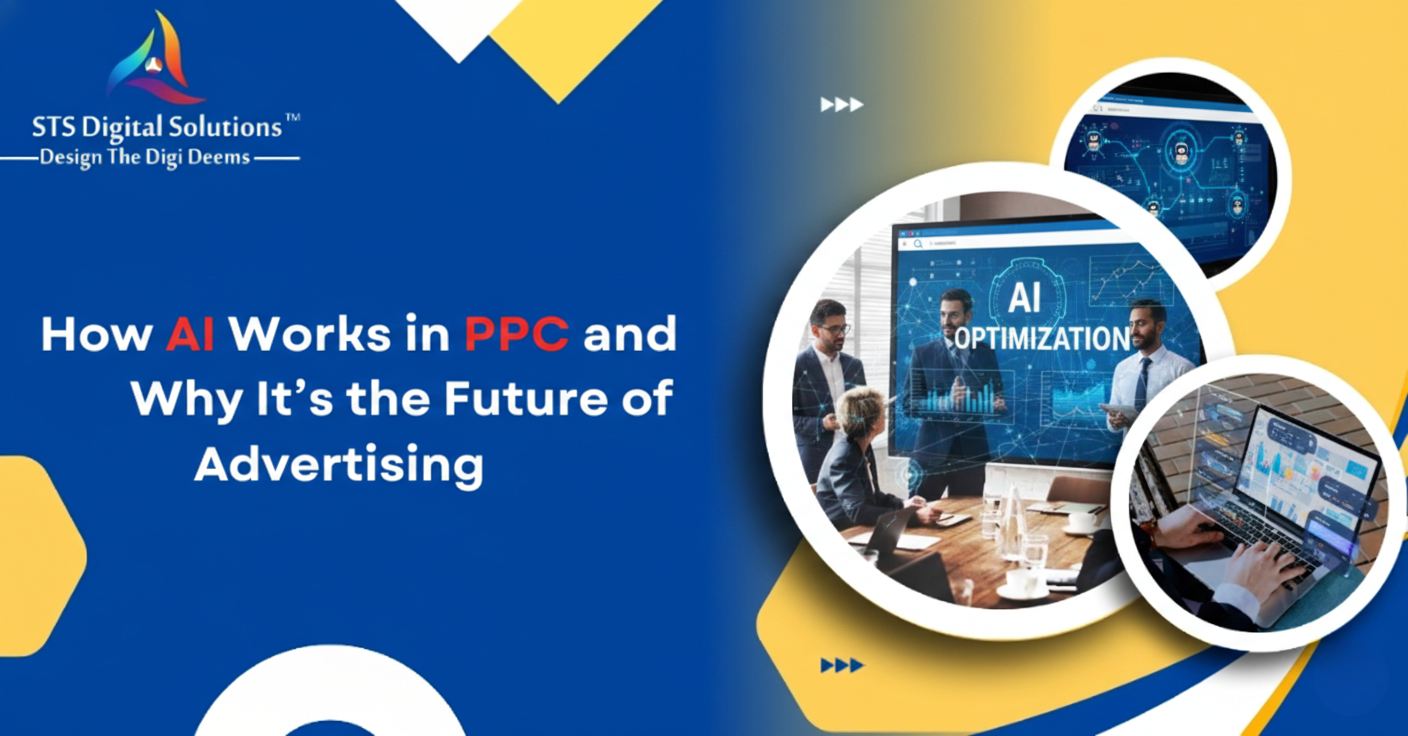
The use of pay-per-click advertising as an advertising tool has developed at an exceptionally fast rate during the past few years, and in 2026, the PRC tool of artificial intelligence (AI) in advertising will be necessary, not a choice. AI is transforming the way brands plan, execute, and optimize paid campaigns, both by automating bidding strategies and anticipating user behavior. Companies that adopt AI-based PPC enjoy improved targeting, increased returns on investment, and greater scalability in their development than conventional manualized advertising approaches.
Understanding the Role of AI in PPC Advertising
Machine learning-powered applications process large amounts of data in real-time to assist advertisers in making smarter decisions than people could have made at any time. Rather than guesswork, AI in PPC Advertising is based on data trends, user searches, and machine learning to keep on improving the performance of the campaign.
AI will make sure that the ads match the audience, the right time, and the right message, and will maximize relevancy and conversions.
How AI Integrates with PPC Platforms
AI is heavily ingrained in Google Ads, Meta Ads, and Microsoft Advertising. These are machine-learning-based systems that automatically make decisions and optimize the campaigns.
Key Integrations Include:
- Smart bidding algorithms
- Prediction of audience behavior.
- Automated ad placements
- Real-time budget allocation
How AI Works in PPC Campaigns
AI changes the PPC campaigns by automating complicated tasks and increasing accuracy and efficiency. Advertisers do not have to handle ads manually, but they can use intelligent systems that are able to learn and improve constantly.
AI-Powered Keyword Analysis and Intent Matching
AI makes use of search questions and user actions to display the advertisement to high intent users. Instead of focusing on sheer keywords in the advertisement, AI in PPC advertising focuses on relevant keywords and conversion potential.
Benefits include:
- Improved keyword purpose targeting.
- Decreased wasted ad spend
- Improved Quality Scores
Automated Smart Bidding Strategies
One of the biggest impacts that AI has on PPC advertisements can be found with the help of smart bidding. Bids are altered with the help of real-time user inputs like location, time, device, and behavior.
AI bidding optimizes for:
- Cost per acquisition (CPA)
- Return on ad spend (ROAS)
- Conversion probability
- Click-through rate (CTR)
AI-Based Audience Targeting and Segmentation
AI is not only beyond simple consumer demographics. It is developing intelligent consumer groups on the basis of behavior, consumer interests, and purchase intent.
Predictive Audience Modeling
Historical data can also help the AI make predictions on the users that are most likely to convert with the PPC campaigns. This can also help the advertisers allocate their budgets on the most valuable groups instead of targeting the “users” generally.
Key Advantages:
- Higher conversion rates
- Reduced costs of customer acquisition.
- Scalability of the campaign.
Dynamic Remarketing with AI
The AI-based remarketing will automatically display personalized advertisements to users with regard to their prior interaction.
Examples Include:
- Product-based remarketing
- Cart abandonment ads
- Upsell and cross-sell campaigns.
AI-Driven Ad Creative Optimization
Ad creatives are a key element to PPC success, and now, AI can be used to test, refine, and optimize creatives automatically.
Automated A/B Testing of Ad Creatives
AI keeps trying variations of headlines, descriptions, pictures, and CTAs to find the best-performing options.
AI Optimizes:
- Ad copy variations
- Creative formats
- Visual placements
- Call-to-action messaging
AI and Real-Time Campaign Optimization
AI can track PPC campaigns 24/7 and thus make real-time changes, which are not possible for humans.
Budget Assignment and Optimization of Spending
AI automatically reallocates budgets to high-performing campaigns, keywords, and audiences.
AI ensures:
- Maximum ROI from ad spend
- Reduced budget wastage
- Greater victory campaign acceleration.
Performance Forecasting and Trend Analysis
There are predictive analytics, which, using AI in PPC, are able to predict future trends in performance and propose optimizations before problems occur.
This helps advertisers:
- Anticipate demand changes.
- Tactic changes in advance.
- Stay ahead of competitors.
Why AI Is the Future of PPC Advertising
AI is not only making PPC better, but it is also revolutionizing the way advertising is done. Due to this growing competition and the increased complexity of consumer behavior, manual PPC management is not going to be viable in the long run.
Scalability and Efficiency
AI can allow advertisers to deal with thousands of keywords, advertisements, and audiences with ease.
The Benefits of the Future are:
- Faster campaign execution
- Reduced human errors
- Improved mass decision-making.
Data-Driven Personalization
The contemporary customers demand individualized treatment. PPC advertising powered by AI utilizes user intent and behavior in order to provide hyper-relevant advertising.
This Results in:
- Increased customer satisfaction.
- Better brand recall
- Increased lifetime value
Challenges of AI in PPC and How to Overcome Them
Although the benefits of AI could be immeasurable, it needs a correct installation and smart management.
Over-Reliance on Automation
Relying on AI to act in blind ways and not to be supervised by human beings may result in misaligned interests. There is still a need for strategic input.
Best Practices Include:
- Clear conversion tracking
- Frequent performance appraisal.
- Strategic human intervention.
Data Quality and Tracking Accuracy
AI is sensitive to valid information. Ineffective tracking may curtail performance.
To Maximize Results:
- Establish adequate conversion tracking.
- Use clean, structured data.
- Make AI objectives business-aligned.
Conclusion
AI has changed PPC advertising fundamentally, making the campaigns more intelligent, quicker, and more profitable. AI in PPC advertisement has automated bidding and predictive targeting, real-time optimization, and creative testing, which allow companies to do more and less manually with better outcomes. With the further development of the advertising platforms, AI-powered PPC will still be at the heart of successful digital marketing.
We assist businesses to use AI-driven PPC approaches at STS Digital Solutions to increase ROI, minimize the amount of wasted ad spend, and become a leader in an already competitive digital environment. We are building future-driven advertising campaigns based on AI, and people using their expertise to optimise the use of AI-driven technology.

Sahil Goyal
Founder & CEO – STS Digital Solutions
Sahil Goyal is an experienced digital marketing strategist and growth leader, who has assisted some of the most successful BFSI & Healthcare, Automotive, and E-Commerce brands to attain sustainable and quantifiable digital success. Being the Founder & CEO of STS Digital Solutions, he spearheads performance-oriented actions in SEO, Digital Marketing, Social Media Marketing, Performance Marketing, E-Commerce Marketing, which assist business to create substantial online presence and generate continuous growth in revenues.
He is a pragmatic and data-driven consultant that focuses on the development of the scalable digital strategies wherein technical SEO, high-quality content, paid advertising, and performance marketing are merged. He is of the opinion that marketing should be aligned with the obvious business objectives, such as more organic traffic, stronger social media brand awareness, paid campaigns that are more ROI-friendly, or more e-commerce brands conversions.
Maximize Your Online Impact - Contact Our Experts!