


How D2C Fashion Brands Scale from ₹0 to ₹10 Lakhs/Month In 2026?
D2C fashion in India is taking off in 2026. With the number of individuals purchasing products on the internet rising by the day, social commerce has become more prominent, AI has begun playing a more prominent role in marketing, and the fashion startup industry has shown how one can grow from nothing to generating ₹10 lakhs worth of sales per month faster than the established brands could do so through traditional retail. However, just having quality products will not help in attaining such success levels.
In today's day and age, D2C fashion brand growth is at the heart of any successful fashion startup, with a combination of paid and organic marketing strategies. Be it Instagram marketing or Google Ads, influencer collaborations, or SEO, all of these will help you in growing your fashion brand. Building a strong foundation for growing D2C fashion brands.
D2C brands have to build their foundation before they go all in on scaling. Many startups make the mistake of just concentrating on ads instead of branding, customer experience, and positioning.
The ultimate goal of any D2C fashion brand for 2026 is to develop a brand identity and build a performance-focused digital strategy.
The Formula for Building a Powerful Brand Identity
One of the main reasons for success in fashion in the long term is branding. Having a strong brand identity can help a business to be more competitive in a saturated market and create emotional connections with customers.
The most important branding features are:
- Create a logo and visual identity.
- Brand colors and typography.
- Product packaging design
- Brand storytelling
- Smooth social media style.
STS Digital Solutions is a premier D2C branding agency that helps fashion brands to deliver high-end and memorable brand experiences to enhance customers' trust and conversion rates.
Selecting The Appropriate Product Category
Not all products grow at the same rate. Winning D2C brands target categories that have high demand and repeat purchase potential.
In 2026, there are some popular fashion categories, such as:
- Athleisure wear
- Oversized streetwear
- Sustainable fashion
- Premium ethnic wear
- Minimalist fashion collections
The PMC-Fit is the most important aspect of the sustainable growth of the D2C fashion brand.
Building a Conversion-Focused Website
More than that, a fashion site has to be appealing and drive visitors to become customers.
Key features on websites are the following:
- Mobile-first responsive design
- Fast loading speed
- High-quality product images
- Smooth checkout process
- Clear call-to-actions
Many fashion brands in Gurgaon and NCR experienced a 35% increase in conversion rates following a website redesign based on CRO principles.
Performance Marketing Strategies That Scale Fashion Brands
In 2026, paid advertising is one of the quickest methods to grow D2C enterprises. But simply buying ads is no longer effective. Smart brands are more concerned with metrics, such as CAC, ROAS, and customer lifetime value.
It's here that a professional D2C performance agency comes in handy.
Meta Ads for Fashion Brand Scaling

Instagram and Facebook remain the biggest drivers of discovery and impulse buying in fashion.
Brands that are successful leverage creative ad strategies to boost ROAS.
These are some of the best ad strategies for Meta:
- UGC-style video ads
- Influencer collaboration campaigns
- Dynamic product retargeting
- Lifestyle-based creatives
- Seasonal launch campaigns
In 7 months, one NCR-based fashion brand took its monthly revenue from ₹1.5 lakhs to ₹9.2 lakhs and earned a 5.8X ROAS with Meta Ads.
A good illustration of the capability of creative performance marketing for a D2C fashion brand.
Google Ads for High-Intent Buyers
Google Ads is able to attract customers who are actively looking for products.
The following are some of the most effective Google campaign types:
- Shopping ads
- Search campaigns
- Performance Max campaigns
- Dynamic remarketing ads
When users have purchase intent, brands generally have a lower CAC for Google Shopping campaigns.
Influencer & Creator Marketing
It's time to take a look at the evolution of influencer marketing in the year 2026. Brands are now partnering with micro-creators rather than investing masses of funds in celebrities.
There are some benefits to micro-influencer marketing:
- Better engagement rates
- Affordable collaborations
- Authentic audience trust
- Improved conversion rates
Multiple D2C brands leveraged our D2C marketing agency to drive more than ₹25 lakhs in total sales via these influencer campaigns.
For sustainable income, focus on SEO and organic growth. When it comes to long-term income, SEO and organic growth are the key.
SEO and Organic Growth for Long-Term Revenue
Brands that invest in SEO can avoid relying on paid ads and enjoy steady traffic increases.
SEO For D2C Fashion Brands Is Quite Important
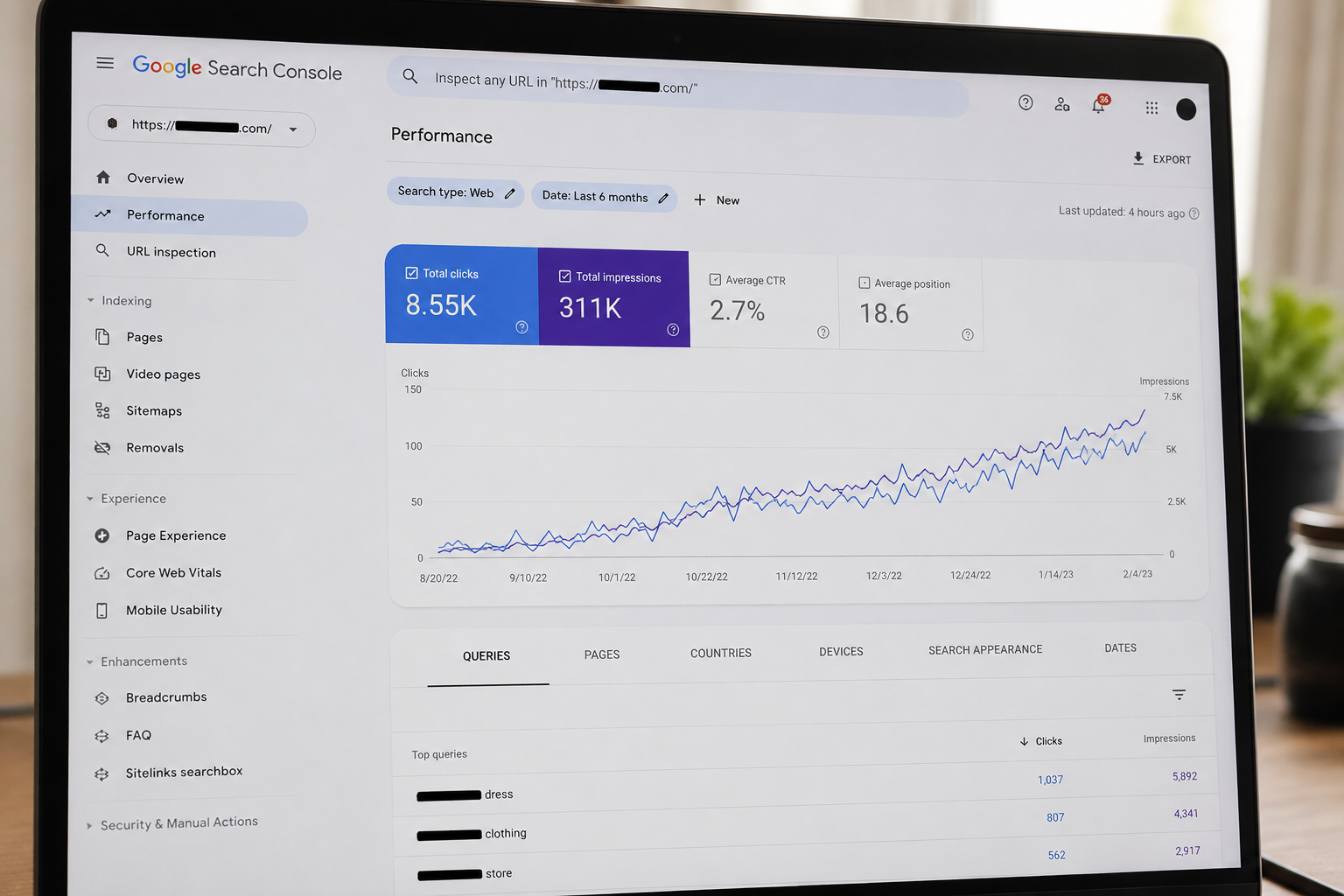
SEO aids brands in achieving organic rankings on Google for product-relevant search queries.
The advantage of SEO is:
- Free long-term traffic
- Better brand trust
- Higher organic conversions
- Reduce CAC
For the consistent growth of D2C fashion brands, a well-planned SEO strategy is crucial.
Content Marketing and Fashion Blogs
Brands are able to draw their top-of-funnel audience with the help of fashion blogs.
The following are considered to be good ideas for content:
- Styling guides
- Seasonal fashion trends
- Celebrity-inspired outfits
- Fabric and fashion tips
Within 8 months, one D2C fashion client of STS Digital Solutions got ranked on 220+ keywords and boosted organic traffic by 340%.
Local SEO and Geotargeting
Local SEO strategies are effective even for brands that aren't established online.
Incorporating pages with geo-targeting elements enhances visibility and credibility in the local area, such as Gurgaon, Faridabad, Delhi NCR, etc.
Geo-targeting strategies include:
- Location landing pages
- Local influencer collaborations
- Google Business Optimization
- NCR-specific campaigns
Retention Marketing: The Real Profit Driver
Many D2C brands solely invest in acquiring new customers and forget to invest in customer retention.
Retention marketing is more profitable since the clients are repeatedly spending more, and it costs less to convert.
Email & WhatsApp Automation
Automation contributes to the retrieval of cart abandonment and boosts repeat purchases.
Common campaigns for automation are:
- Welcome email sequences
- Cart abandonment reminders
- Festive sale campaigns
- Product recommendation flows
Brands that automate their retentions can boost repeat sales by 20-40%.
Loyalty & Referral Programs
Fans of a brand are loyal customers.
Some good loyalty ideas are the following:
- Reward points systems
- Referral discounts
- VIP customer access
- Exclusive launches
Metrics Every D2C Fashion Brand Must Track

Wasting marketing budgets is the direct result of scaling without keeping track of data. Successful brands track key metrics on a regular basis.
Important D2C Metrics
The following are key performance indicators:
- The ROI on ad spend is measured by ROAS (Return on Ad Spend)
- Customer Acquisition Cost (CAC)
- AOV (Average Order Value)
- Repeat purchase rate
- Conversion rate
In our role as a D2C performance agency at STS Digital Solutions, we've created campaigns that have resulted in ROAS between 4X and 7X for multiple fashion brands.
Balancing Profitability and Scale
Many brands scale revenue and lose profitability. When growing a sustainable direct-to-consumer (D2C) fashion brand, there is a need to balance the cost of customer acquisition with sustainable revenue generation.
Some of the most frequent pitfalls that hinder D2C brands from scaling up are the following:
Poor execution and expectations are the leading causes of the downfall of many startups.
- Overdependence on One Channel: Relying only on Instagram or Meta Ads increases business risk.
- Weak Branding Strategy: Poor packaging and inconsistent branding reduce trust.
- Ignoring Retention Marketing: Acquiring customers without retention increases CAC.
- No Data-Driven Decision Making: Scaling without analytics leads to poor ROI.
Conclusion
Building a successful fashion startup that scales from ₹0 to ₹10 lakhs per month by 2026 will depend on proper branding, SEO, performance marketing, retention, and analytics. Companies that invest in the development of their D2C fashion brand in the long run, rather than short-term sales, have been able to establish themselves in the current competitive environment.
From Meta Ads, influencer marketing, SEO, and even automation, each aspect plays an important part in scaling modern D2C brands. Companies that measure metrics such as ROAS, CAC, and repeat purchase rate can make improvements in their campaign.
STS Digital Solutions helps fashion start-ups grow by offering solutions such as branding, SEO, and performance marketing. We are a reputed D2C marketing agency, D2C performance marketing agency, and D2C branding agency who have been responsible for helping many brands earn lakhs of rupees every month from their ROAS-focused campaigns.

Sahil Goyal
Founder & CEO – STS Digital Solutions
Sahil Goyal is an experienced digital marketing strategist and growth leader, who has assisted some of the most successful BFSI & Healthcare, Automotive, and E-Commerce brands to attain sustainable and quantifiable digital success. Being the Founder & CEO of STS Digital Solutions, he spearheads performance-oriented actions in SEO, Digital Marketing, Social Media Marketing, Performance Marketing, E-Commerce Marketing, which assist business to create substantial online presence and generate continuous growth in revenues.
He is a pragmatic and data-driven consultant that focuses on the development of the scalable digital strategies wherein technical SEO, high-quality content, paid advertising, and performance marketing are merged. He is of the opinion that marketing should be aligned with the obvious business objectives, such as more organic traffic, stronger social media brand awareness, paid campaigns that are more ROI-friendly, or more e-commerce brands conversions.
Maximize Your Online Impact - Contact Our Experts!