


How Social Media Marketing Services in Delhi Can Turn Engagement Into Real Leads
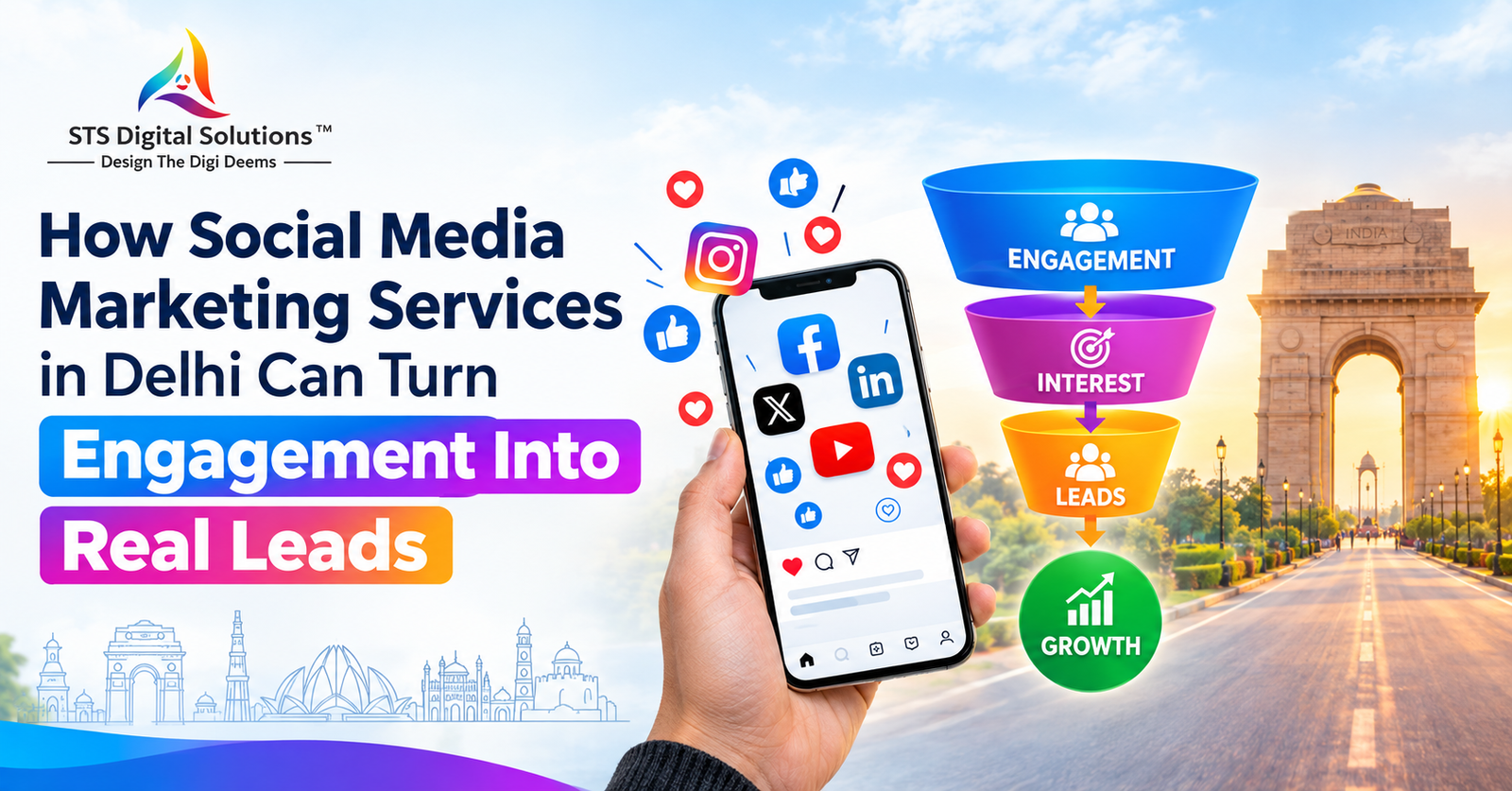
Social media has turned out to be an effective marketing tool that helps businesses to reach their target audience, earn their trust, and understand their needs. Nonetheless, getting likes, comments, shares, and followers is not necessarily going to help businesses grow. The true value of social media is being able to convert such interaction with the audience into relationships and leads. For companies that want to expand their online presence, Social Media Marketing Services in Delhi provide an integrated solution in terms of translating online presence into consumer actions. This will be achieved through effective content strategies that address the needs of the consumer.
STS Digital Solutions focuses on a strategic approach to digital marketing, where every piece of content and campaign is designed to support specific business goals. Rather than simply increasing engagement, the aim is to reach the right audience, build meaningful connections with potential customers, and encourage them to take an interest in the brand’s products or services.
Why Social Media Engagement Does Not Always Generate Leads
Companies invest a lot in creating success on their social media profile pages, yet they fail to turn this interaction into leads. Although they receive many likes from their posts, there will be very few who will go through to their website and contact the company. The situation is normally created by focusing on engagement as the ultimate aim rather than as the starting point of the customer journey. The use of visuals and interesting content will surely grab the attention of the viewers; however, this may not be enough to make them take any action. For example, a digital marketing firm can write something about the importance of SEO. But if the content does not include how SEO can benefit their firm and how they can find out more information about it, then they will just move ahead. Some of the factors that can cause this issue are:
- Incorrect Audience: This content is being shared with people who don't even require their services.
- CTA: Users have no idea what needs to be done after the post.
- Non-specific Content: The content doesn't address any issues of the clients.
- Lack of follow-Up: There is no follow-up by the company to turn them into customers.
- Activity Analysis: The company doesn't understand which activity has resulted in their inquiries.
These problems can be solved using a properly designed strategy which will incorporate aspects such as content creation, audience psychology, and opportunities for conversion. Every single post made should have a certain goal – to either increase brand awareness, engage potential customers, attract leads, or convert the visitors into buyers.
How Social Media Marketing Services In Delhi Attract the Right Audience
For generating quality leads, it is necessary to identify individuals who are genuinely interested in purchasing from a particular company’s products or services. Although generating many followers might sound impressive, an appropriate audience for a particular company may have more advantages than many followers at times. Professional Social Media Marketing Services in Delhi can help businesses create campaigns based on their audiences and other requirements.
1. Understanding Customer Needs
Prior to the creation of any content, a company needs to be clear on the audience it is trying to reach. This involves having knowledge of issues customers face, their interests, shopping behavior, and queries prior to selection of a specific service. If, for example, the company offers website development services, it would try to reach out to those companies that either need a new website or need to improve their existing website. In such a situation, the social media content would revolve around website usability, mobile-friendly websites, load time, and website design. Content that is relevant to customers' problems is helpful and leads to interaction. Instead of attracting everybody, it will attract potential customers.
2. Creating Content That Encourages Action
Content on social media needs to accomplish much more than simply drawing people's attention. They need to educate people about the issue, give some information, and make people understand that there is a next step that needs to be taken. Perhaps, a mixture of educational content, video, service, product, and promotional materials could be an appropriate choice when developing the content strategy. Each kind of content plays its specific role in the buyer’s journey. Hence, educational content may help introduce the issue, and service content describes the way in which it is solved by the company. Then, users can be urged to request more information with a call to action. Content must correspond to both the audience and chosen social network.
3. Turning Likes, Comments, and Shares Into Qualified Leads
The interaction will have even more significance when companies know what people do after their content interacts with them. Liking the post tells the company that the user finds the content interesting, but requesting the price via direct message or visiting the services’ webpage has much more weight. The objective is to make things easy for those who are curious.
4. Use Clear Calls to Action
A call to action informs users about their next step. Users may be interested in a post but have no particular need to connect with the business. In accordance with the objective of a marketing campaign, a company can encourage users to send a message, visit a website, complete an inquiry form, arrange a consultation, or request a quote. For example, a professional service provider may use the end of the post to encourage users to discuss their needs. It gives the audience something to do instead of just following the page. A call to action has to correspond to the degree of the user’s interest as well.
5. Make the Enquiry Process Simple
Even enthusiastic consumers might depart if the process of contacting a company seems cumbersome. Confusing contact information, long forms, and extra stages can prevent users from finishing their query. The organization needs to create easy ways of contacting through direct messages, website forms, or WhatsApp conversations where appropriate. Forms of inquiry must ask for necessary information about the customer’s needs.
Creating a separate landing page is also helpful. It needs to describe the service, mention its benefits, answer questions, and offer users an option to inquire. If the message is the same on the social media post and the landing page, the user will be more confident in making his decisions.
6. Respond to Enquiries Promptly
Lead generation does not cease after someone sends out their message. The reply generated could determine whether the individual will continue on with the interaction. There is a need for a company to have a process in place for handling the enquiry, responding appropriately, and getting back to those who showed interest. Responses need to be clear, informative, and relevant. Having an organized follow-up process also helps in ensuring that genuine leads are not overlooked. Businesses get a chance to know more about potential customers' needs and what hinders them.
Using Paid Social Media Campaigns to Generate More Leads
Organic social media posts that are organic are beneficial to the company, as they aid in building awareness and keeping up with their relationship with their clients. Paid ads can be used to enhance their campaign in terms of reaching out to specific audiences and targeting their offers towards them. Facebook and Instagram offer paid advertising solutions with objectives for lead generation, traffic to websites, and direct inquiries. These are based on the objectives of the companies, their target audience, and customers' journey. Some of the things a business can do to make its campaign better include:
- Audience targeting: Target those customers who have a higher probability of being interested in the offer.
- Relevant creative: Send creative content that is relevant to the customers’ needs.
- Clear offers: Clearly explain the offer or benefit without setting false expectations.
- Retargeting: Retarget, where appropriate and where allowed, those customers who had engaged with the business earlier.
- Campaign testing: Test different campaigns in order to determine which one works better.
Paid advertising, however, does not necessarily ensure that there are any qualified leads. This depends on several things like the offer, competition, audience choice, the budget for advertising, landing page experience, and follow-up process. It is important for companies to look at both the quality and quantity of leads. A campaign with fewer leads may be more valuable than one with many leads that are irrelevant.
Measuring Social Media Results Beyond Likes and Followers
Likes and shares can indicate that content is attracting attention, but they do not show the complete business impact of a campaign. To understand whether social media is generating leads, businesses need to track metrics connected to their objectives.
Metric |
What It Measures |
|
Reach and impressions |
How often content is displayed and how many people it reaches |
|
Engagement rate |
How actively users interact with content |
|
Link clicks |
How many users visit a website or landing page |
|
Enquiry volume |
How many potential customers contact the business |
|
Cost per lead |
The advertising cost associated with generating a lead |
|
Lead quality |
How closely enquiries match the ideal customer profile |
|
Conversion rate |
How effectively users complete the desired action |
This helps understand areas that can benefit from improvement. If there is good engagement but few link clicks, the message or call-to-action should be revised. If there is high website traffic but a low number of inquiries, there could be some barriers on the landing page or inquiry page. In case a campaign produces many leads but few viable ones, there could be an issue with target audience or campaign messaging. Performance analysis will help businesses make the right decisions regarding activities for reaching their marketing goals.
Building a Social Media Funnel That Converts Interest Into Leads
The social media marketing funnel helps consumers who have no idea about your business to get interested in your services and eventually make an inquiry. Every step should offer the right amount of information to move forward.
- Awareness: Awareness of the business will be brought through posts, videos, and tips regarding education. Here, the goal will be to attract and raise awareness of the audience in terms of the solutions available through the business.
- Consideration: The solution description, FAQs, demonstrations, and informational posts help the customer gain awareness of the solutions available through the business. This is one of the very important stages of raising consideration and handling problems and concerns.
- Conversion: The lead forms, inquiry forms on the site, direct messages, and consultations may all act as ways in which the user reaches out to the business.
- Follow-up: Once the user makes an inquiry, the business can reach out and find out more about the customer’s needs.
For example, a firm offering digital marketing services can create a blog on the problem of website traffic. The stakeholders will then be directed to the services page where they will get the solution and fill in the inquiry form for consultation. This strategy ties the content to the sales process rather than treating the blogs as individual activities.
Choosing the Right Social Media Strategy for Your Business
Different companies have different needs for marketing. A local service provider, for example, will want to generate inquiries from the locality, while an e-commerce business will want to make sales. A B2B firm might wish for contacts and consultations. Before embarking on a social media marketing campaign, the business should be able to define its objectives, target audience, and methods to allow the business to measure its success.
When working with a professional marketing firm, these processes will become a lot simpler. In processes such as content creation, campaign management, and performance monitoring, having a system for doing things will help the company remain consistent and know when changes are required. This will be essential in aligning the content created with the goals set. The company should stop focusing on just posting regularly and getting followers but instead on developing relationships with its customers.
Conclusion
It can be said that social media engagement is valuable only when it leads to useful engagements and business opportunities. This can be done through targeted audiences, generation of valuable content, call-to-action, simplification of the inquiry process, and quality analysis of leads. Constant analysis and follow-up are equally essential for the conversion of an interest into business leads. Choosing the right Social Media Marketing Services in Delhi will help create a strategy for generating leads. Instead of aiming for likes and followers, the key point here is to reach out to the right audiences and make them act.
The application of STS Digital Solutions should be taken into account by companies wanting to improve their digital marketing efforts and align the work done through social media with the business’s goals. By doing appropriate planning and setting goals, firms can get more mileage out of their social media activities.
Frequently Asked Questions
1. What is the use of social media marketing for attracting leads?
Social media marketing helps businesses attract leads in terms of reaching out to the target audience, providing them with valuable information, and promoting the relevant product or service. This further helps in encouraging potential customers to engage with the business through direct messaging, inquiry forms, and other calls to action.
2. Which social media channel is the best one to create leads?
It will depend on the business model and the audience, but LinkedIn might work for many B2B companies, while Facebook and Instagram will work well for local services, consumer brands, and product-based companies.
3. How much time does it take to create leads via social media?
Again, it depends on many factors such as the industry, the audience, the content strategy, the amount of money spent on advertising, and the offer.
4. Discuss the difference between engagement and lead generation.
Engagement is constituted by likes, comments, shares, and saves. Lead generation involves contacting potential customers who express their interest in some way by inquiring or requesting a quote.
5. How do you measure the success of social media marketing efforts?
The performance of social media marketing can be determined using metrics such as website clicks, customer inquiries, cost per lead, lead quality, conversions and total sales. This enables organizations to identify whether their campaigns are reaching the right people and helping them grow.

Sahil Goyal
Founder & CEO – STS Digital Solutions
Sahil Goyal is an experienced digital marketing strategist and growth leader, who has assisted some of the most successful BFSI & Healthcare, Automotive, and E-Commerce brands to attain sustainable and quantifiable digital success. Being the Founder & CEO of STS Digital Solutions, he spearheads performance-oriented actions in SEO, Digital Marketing, Social Media Marketing, Performance Marketing, E-Commerce Marketing, which assist business to create substantial online presence and generate continuous growth in revenues.
He is a pragmatic and data-driven consultant that focuses on the development of the scalable digital strategies wherein technical SEO, high-quality content, paid advertising, and performance marketing are merged. He is of the opinion that marketing should be aligned with the obvious business objectives, such as more organic traffic, stronger social media brand awareness, paid campaigns that are more ROI-friendly, or more e-commerce brands conversions.
Maximize Your Online Impact - Contact Our Experts!