


How User Behaviour Data Can Improve Website Conversion Rate
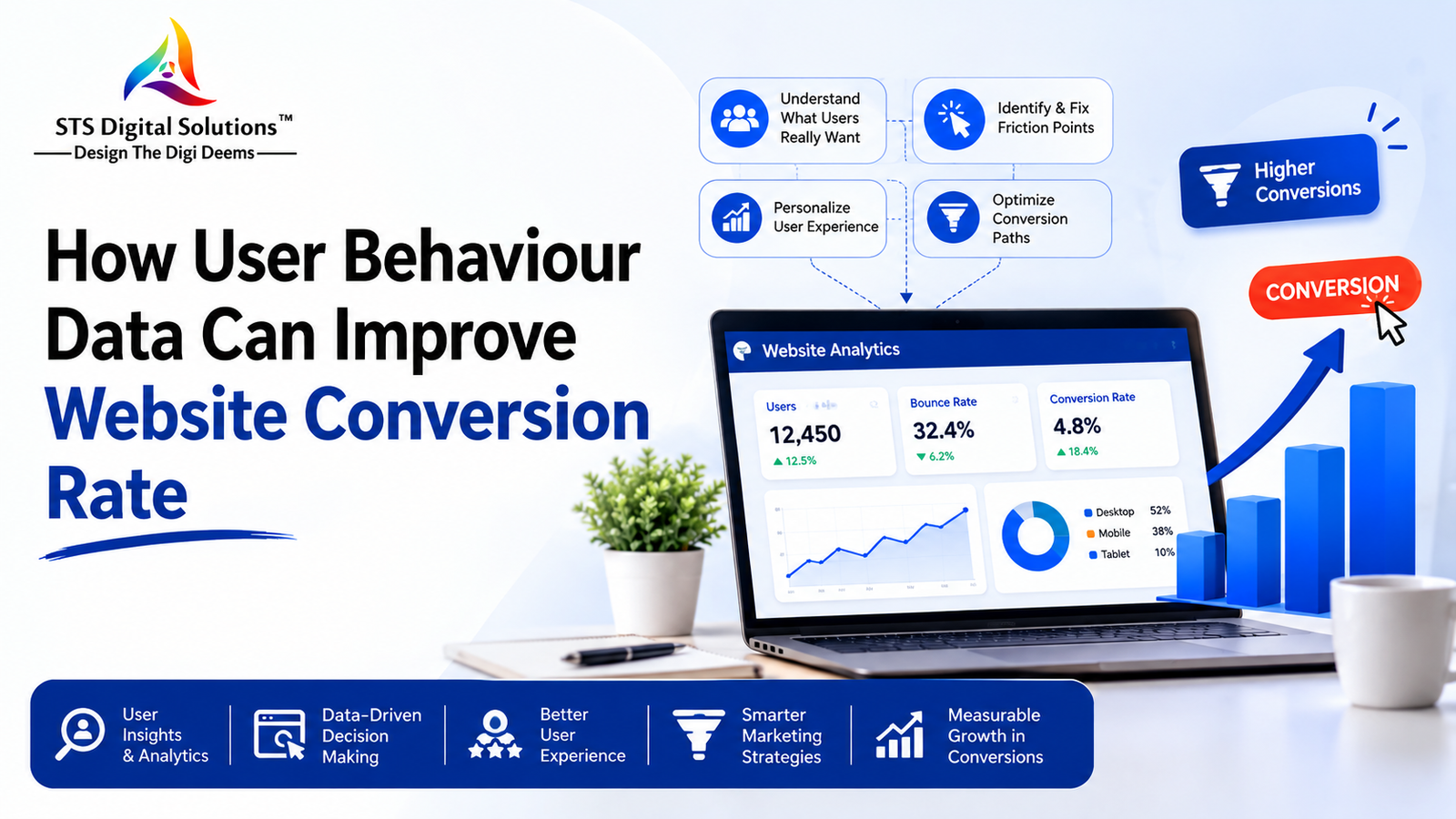
There are thousands of people who visit an online portal in a month; however, there is no change in the number of inquiries.
The marketing department thinks it requires more visitors. The SEO team tries to find new keywords. The advertising budget increases. Some new social media initiatives get started.
However, what if the issue is happening once people reach the site?
It could be possible that the users are clicking a button that does not take them anywhere. It could be possible that users keep visiting the pricing page but are unable to find the required information. Or maybe users leave a form unfinished due to some usability issues on mobile devices.
If one does not analyze the activities of visitors on a web page, such issues may go unnoticed.
User behaviour analysis is important in such situations because it can help companies find out the places where users need assistance.
Why Behaviour Data Is More Important than Traffic Numbers
Traffic data tells a company how many visitors have come to the website.
However, it does not say anything about what happens next.
Two websites that get exactly the same traffic can achieve extremely different commercial outcomes.
One will be able to help users navigate through to the products, inquiries, or bookings. While another one will make users feel confused, overwhelmed, or unsure of what to do.
This point is significant as conversion involves behaviour.
For the user to convert, he/she should know what it offers, trust it, and have sufficient confidence to make the move. Any additional hurdle on the way will provide grounds for dropping off.
Modern analytics tools allow companies to study such interactions more closely. They can show pageviews, engagement rates, paths taken, forms filled, scrolling activity and conversion paths.
All these points together tell what users are trying to do.
Industry Insight
Digital customers have become increasingly comfortable comparing businesses before making decisions. They can move between websites, read reviews, compare prices and research alternatives within minutes.
This means websites have less room for unnecessary friction.
A business might have strong search visibility and an attractive design, but visitors can still leave if the information architecture is confusing or the value proposition is unclear.
The growth of mobile browsing has added another layer to the challenge. A page that feels intuitive on a large desktop screen may be frustrating on a smartphone. Buttons may be difficult to tap, forms may require excessive scrolling and important information may appear too far down the page.
Businesses therefore need to understand behaviour across devices and user journeys rather than evaluating websites purely from an internal perspective.
The key shift is from asking, “Do we like our website?” to asking, “Can our users accomplish what they came here to do?”
Expert Commentary
Effective website optimisation begins with evidence.
A designer can make a strong argument for changing a layout. A marketer can believe a particular headline will perform better. A business owner may think visitors want more information.
Those opinions can be useful starting points, but behaviour provides a stronger basis for prioritisation.
Identify Where Visitors Lose Momentum
Businesses should examine the journey from entry to conversion.
If visitors consistently leave after reaching a particular page, that page deserves investigation. If users repeatedly return to a previous page before completing an action, the navigation or information structure may not be clear enough.
A high exit rate does not automatically mean a page is bad. A contact page, for example, may naturally end a visitor's journey after they find the required information.
Context matters.
Look Beyond the Conversion Button
Conversion problems are not always located immediately before the conversion.
A visitor's decision can be influenced by the quality of information they see several pages earlier. Confusing navigation, weak product descriptions, missing trust signals or unclear pricing can create hesitation long before someone reaches a form or checkout page.
This is why user journey analysis should consider the complete experience.
Combine Quantitative and Qualitative Evidence
Analytics can show that users abandon a page. It may not explain why.
Combining behavioural metrics with customer feedback, surveys, usability testing and support conversations can provide a more complete picture.
If analytics shows high abandonment on a form and customers frequently complain that the form is too long, the evidence becomes considerably stronger.
Proof & Real-World Perspective
Consider a professional services company whose website receives substantial traffic to a service page but generates relatively few enquiries.
The obvious reaction might be to increase advertising.
However, behavioural analysis could reveal that visitors frequently scroll through the page, reach the pricing section and then leave. That pattern could suggest that pricing information, service scope or perceived value needs clearer explanation.
The solution may therefore be better messaging rather than more traffic.
Another example is an e-commerce store where users regularly add products to their carts but fail to complete checkout.
Instead of assuming that customers simply changed their minds, the business could examine where abandonment occurs. If users consistently leave after shipping information is displayed, unexpected delivery costs may be creating friction.
This type of insight can lead to a practical change such as displaying shipping information earlier.
The value lies in connecting behaviour with a plausible business problem and then testing the proposed solution.
Analysis
The most useful user behaviour data does more than describe what visitors did. It helps explain where the website experience may be failing.
It Reveals Hidden Friction
Visitors rarely tell a business every time something frustrates them. Behaviour can reveal recurring patterns that users never report directly.
Repeated backtracking, abandoned forms or rapid exits from important pages may indicate areas that deserve investigation.
It Helps Prioritise Website Improvements
Not every website problem deserves immediate attention.
A minor issue on a low-traffic page may have little commercial impact. A smaller problem on a high-traffic landing page could affect thousands of potential customers.
Behavioural evidence helps businesses prioritise improvements based on potential impact.
It Supports Better Personalisation
Different audiences may behave differently.
New visitors may need more educational information, while returning visitors may be ready for a direct purchase or enquiry. Behavioural patterns can help businesses understand these differences and create more relevant experiences.
It Improves Conversion Rate Optimisation
Conversion rate optimization becomes more effective when changes are based on evidence.
Instead of redesigning an entire website, businesses can identify specific friction points, develop a hypothesis, make a controlled change and monitor the outcome.
Data Can Also Be Misinterpreted
Behavioural analytics is powerful, but it is not self-explanatory.
A high exit rate does not automatically indicate failure. A long time on page can mean users are highly engaged—or struggling to find information.
Businesses should avoid drawing conclusions from isolated metrics.
Patterns become more meaningful when they are considered alongside page purpose, traffic source, device type, user intent and actual business outcomes.
Privacy should also remain central. Businesses must collect and use behavioural information responsibly and follow applicable privacy and data protection requirements.
Recommendations
Businesses that want to use user behaviour data effectively should create a structured optimisation process.
Establish a Baseline
Before making changes, record current conversion rates and important engagement metrics. Without a baseline, it becomes difficult to determine whether an improvement actually worked.
Map Important User Journeys
Identify the journeys that matter most to the business.
For an e-commerce website, that might be product discovery to checkout. For a service company, it could be landing page to enquiry form. For a SaaS business, it may involve product page to free trial.
Investigate Drop-Off Points
Look for unusual exits, abandoned forms, repeated navigation patterns and pages where users appear to lose momentum.
These should become hypotheses for further investigation rather than immediate conclusions.
Combine Multiple Sources of Evidence
Use analytics alongside customer feedback, support queries, usability testing and sales-team observations.
Different sources can reveal different aspects of the same problem.
Test One Meaningful Change at a Time
If a business changes the headline, layout, form, pricing and CTA simultaneously, it becomes difficult to understand which change influenced the result.
Where traffic and conditions allow, controlled testing can provide stronger evidence.
Measure Business Outcomes
Do not stop at engagement metrics.
Track qualified leads, completed purchases, revenue, booking requests, lead quality or other outcomes that directly connect website activity to business objectives.
Closing Thoughts
A website is not a static brochure. It is an environment where people make decisions, search for information and decide whether a business deserves their attention and trust.
User behaviour data helps businesses see that experience from the visitor's perspective. It can reveal where users hesitate, what information they seek, which journeys create friction and which improvements deserve priority.
The objective is not to collect as much data as possible. It is to collect meaningful evidence and use it to make smarter decisions.
For businesses looking to improve website performance, STS Digital Solutions can support the broader process through website development, SEO, digital marketing and data-informed digital strategies. When behavioural insights are combined with thoughtful design and continuous testing, a website can become significantly more effective at turning interest into meaningful business results.

Sahil Goyal
Founder & CEO – STS Digital Solutions
Sahil Goyal is an experienced digital marketing strategist and growth leader, who has assisted some of the most successful BFSI & Healthcare, Automotive, and E-Commerce brands to attain sustainable and quantifiable digital success. Being the Founder & CEO of STS Digital Solutions, he spearheads performance-oriented actions in SEO, Digital Marketing, Social Media Marketing, Performance Marketing, E-Commerce Marketing, which assist business to create substantial online presence and generate continuous growth in revenues.
He is a pragmatic and data-driven consultant that focuses on the development of the scalable digital strategies wherein technical SEO, high-quality content, paid advertising, and performance marketing are merged. He is of the opinion that marketing should be aligned with the obvious business objectives, such as more organic traffic, stronger social media brand awareness, paid campaigns that are more ROI-friendly, or more e-commerce brands conversions.
Maximize Your Online Impact - Contact Our Experts!