

What is URL Structure In SEO? Best Practices and Impact on Rankings (2026)
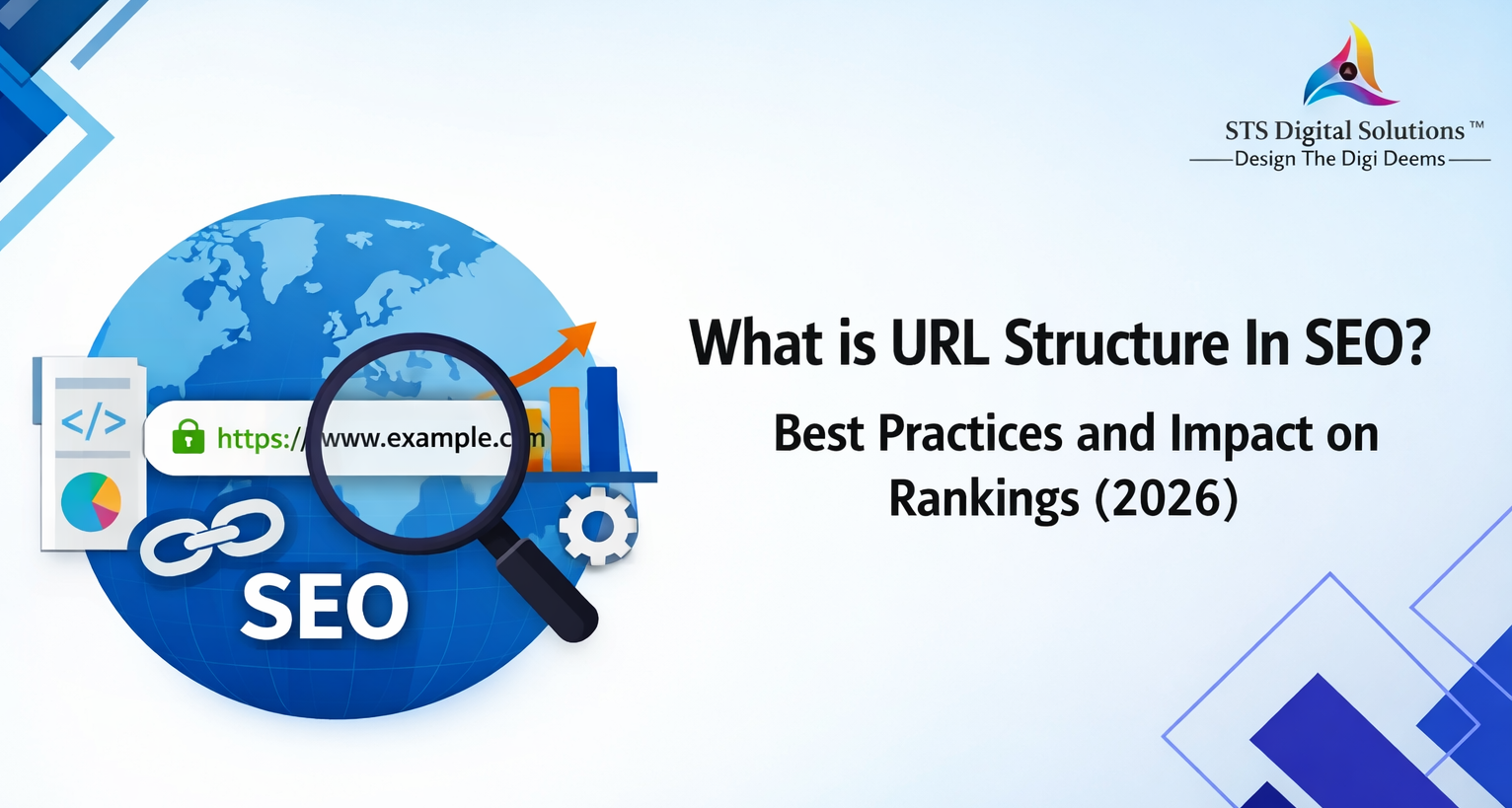
One of the most important, yet neglected, components of SEO on your web page is the URL base of your site. An organized URL does not only improve the user experience, but it also allows the search engines to better figure out what your pages entail. This blog will discuss the URL Structure in SEO. In SEO, the best practices to consider, the most common errors that should be avoided, and how a well-organised URL affects your ranking in the search results in 2026.
The Structure of URLs in SEO
A URL, or Uniform Resource Locator, is the address of a given page on your website. A URL structure is important in the user experience and search engine optimisation. An easy-to-find, indexable, hierarchical, clean, descriptive URL will mean that your content is easily discoverable, indexable and shareable.
For Instance:
-
Unsuitable URL: page?id=12345
-
Optimised Title: SEO Best Practices: URL Structure – Best Practices at example.com.
The optimised version lets the users and search engines know the purpose of the page right away. The readability, relevance of the keywords and clarity of URLs will affect the click-through rates and indexing and eventually your rankings.
The Importance of URL Structure to SEO
A good URL Structure In SEO is not simply relevant to search engines. Here’s why:
- Better Crawlability: When URLs are good and logical, then the search engines can index the pages better.
- Improved User Experience: Easy-to-read URLs foster customer trust and improve the ability of customers to navigate your site.
- Increased Click-Through Rates: URLs that specify the content on the page will result in more search engine results page clicks.
- Keyword Optimization: It is always better to add related keywords in your URL in order to increase its visibility and relevancy in search queries.
Businesses can lay a solid foundation for the success of sustainable SEO by paying attention to the URL structure.
Best Practices URL structure In SEO
Use of best practice will make sure that your URLs are user-friendly as well as search engine-friendly.
-
Keep URLs Short and Simple
The short URLs are pleasant and simple to share, remember, and read. Nothing must be added into the address that makes it difficult to understand, such as long numbers, unnecessary words or special characters.
-
Include Target Keywords
Using your most important keyword in the URL is also beneficial, as it gives a clue to the users and search engines on what the page is about. An example is the URL structure in SEO that is a component of the URL which makes it relevant.
-
Hyphen Usage and No Underlining
Hyphens enhance the readability, and Google prefers to use hyphens in a URL to separate the words. Example:
Example.com/seo/url-structure-in-seo is more effective as compared to example.com/seo/url-structure-in-seo.
-
Have a Logical Hierarchy
Arrange URLs in the structure of the web sites to demonstrate the categories and subcategories. Example:
The page is in the category of SEO, as can be seen at www.example.com/seo/url-structure-best-practices.
-
Avoid Dynamic Parameters
Search engines are less able to interpret URLs that contain more than one parameter, such as 'id=123&ref=456'. It is best to use clean and non-dynamically generated URLs.
-
Use Lowercase Letters
Use of lower case letters will avoid a problem of duplicate content, and the URLs will also be easier to type and transfer.
-
Implement HTTPS
Security is another ranking factor. A secure URL beginning with 'https' does not just secure your users, but it also enhances the SEO.
The URL Structure and the Effect on the Rankings
Optimum URL structure has a direct impact on your search ranking:
- Enhances Search Engine Perception: Comprehensible URLs contribute to the perception of the search engines because the search engines are able to understand the content and the context of the page.
- Favours Keyword Relevancy: The presence of the keywords in the URL does increase the ranking possibilities of the keywords.
- Increases User Trust and Interaction: Descriptive and readable URLs increase users’ clicks, which makes the bounce rates lower and enhances the engagement statistics.
- Improves Sharing of Links: The simplest and meaningful URLs will be shared in social media, blogs, and forums, which indirectly positively affects SEO.
Through URL Structure In SEO, companies are able to maximise the visibility of their website in the search engine results and overall better the performance.
Common URL Mistakes to Avoid
Despite the noble intentions, most websites commit some errors that will diminish the efficiency of their URL hierarchy:
- By having too long URLs that contain unnecessary words.
- Disregarding the presence of keywords in URLs.
- The use of uppercase and lowercase is mixed inconsistently.
- The insertion of the session IDs, tracking numbers or irrelevant parameters.
- Resorting to symbols or figures which do not contribute to clarity or value.
The pitfalls can be avoided to make sure that your URLs are search-engine-optimised and user-friendly.
Position of URL Structure in 2026 Trend in SEO
The role of URL structure is on the rise as SEO is evolving. Best practices will be:
- Semantic URLs: A search engine will give preference to URLs which match the user intention and the natural language.
- Mobile-Friendly URLs: Shorter and clearer URLs are used with mobile-first indexing, with the smaller screens.
- Formatted Data Combining: URLs are expected to show content structure in the form of hierarchies, sizeable rich snippets and featured snippets.
- Topic Clusters and Hierarchies: URLs are to reflect the general content structure and connect the related pages.
At STS Digital Solutions, business owners are advised to have clean, keyworded and hierarchical URLs to ensure that they surpass other businesses.
Tradeoff Between SEO and User Experience
The most important thing in optimisation of URL Structure In SEO is balancing between the needs of a search engine and the needs of the user. Although important, keywords are not as important as readability and simplicity are for engagement. A URL must inform the user of exactly what he wants, although it must contain keywords to facilitate search engine optimisation.
- Do not use numbers or generic IDs or describe using descriptive words.
- To make the page names and headings consistent with the URL structure.
- Make URLs simple to pronounce (read), pass on, or memorise.
With this level of balance, you come up with URLs that are effective tools of SEO and enhance the overall website usability.
Conclusion
Learning URL Structure In SEO is vital to any business that tries to establish a higher search ranking and enhance the level of user interaction. A clean, descriptive, and well-organised URL ensures high crawlability and increased relevancy of keywords and high click-through rates, as well as sharing of links.
In STS Digital Solutions, we are experts in developing SEO plans that include all the details such as the URLs to enable websites to be ranked higher, to attract more visitors and offer a smooth user experience. With the above best practices in place, your site can use its URL structure as a building block of your future SEO in the year 2026.

Sahil Goyal
Founder & CEO – STS Digital Solutions
Sahil Goyal is an experienced digital marketing strategist and growth leader, who has assisted some of the most successful BFSI & Healthcare, Automotive, and E-Commerce brands to attain sustainable and quantifiable digital success. Being the Founder & CEO of STS Digital Solutions, he spearheads performance-oriented actions in SEO, Digital Marketing, Social Media Marketing, Performance Marketing, E-Commerce Marketing, which assist business to create substantial online presence and generate continuous growth in revenues.
He is a pragmatic and data-driven consultant that focuses on the development of the scalable digital strategies wherein technical SEO, high-quality content, paid advertising, and performance marketing are merged. He is of the opinion that marketing should be aligned with the obvious business objectives, such as more organic traffic, stronger social media brand awareness, paid campaigns that are more ROI-friendly, or more e-commerce brands conversions.
Maximize Your Online Impact - Contact Our Experts!