

Which WordPress Development Decisions Can Create Long-Term Performance and Maintenance Problems?
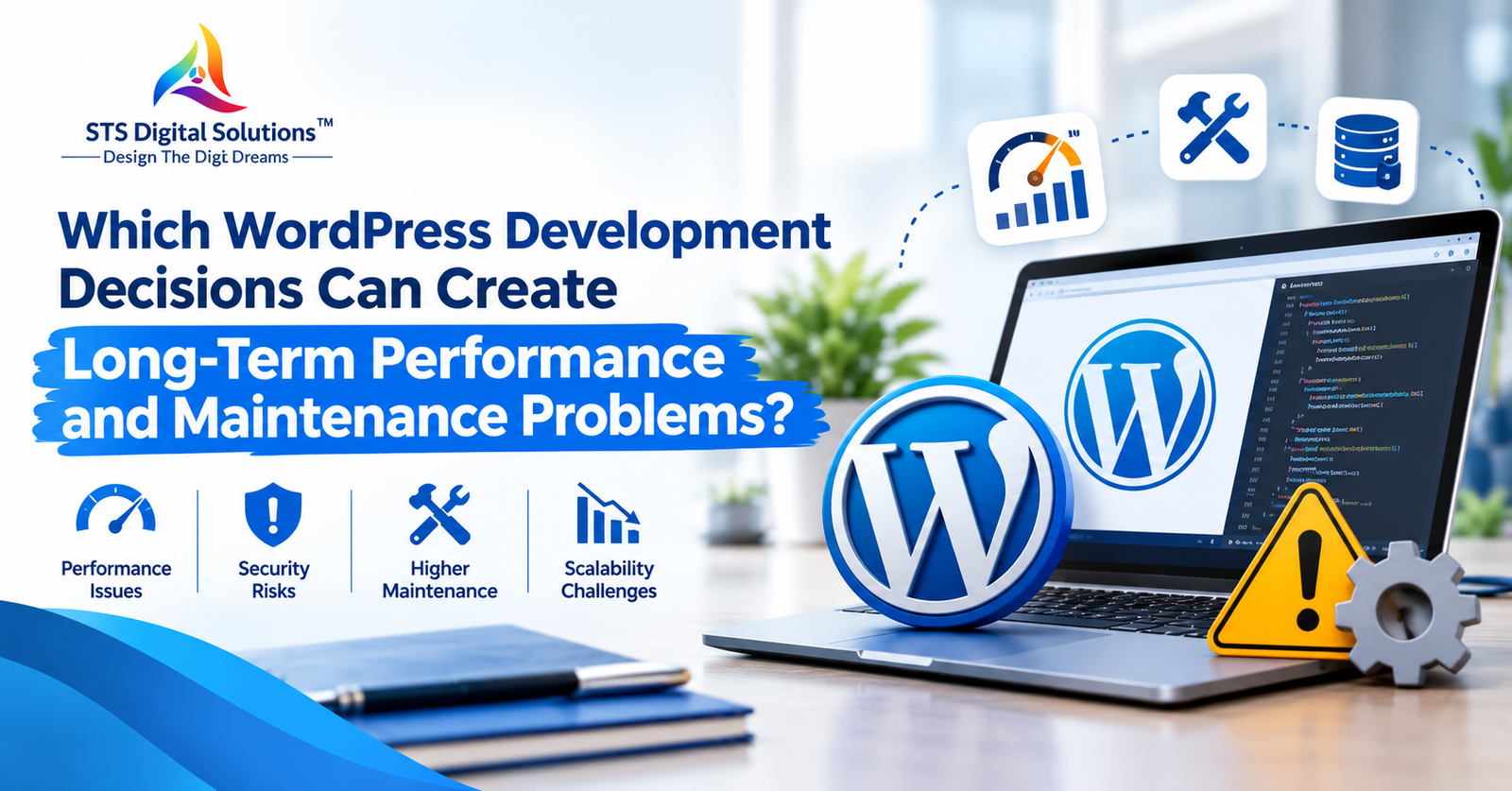
WordPress is a flexible platform that allows businesses to build websites for different needs, from simple business websites to large e-commerce platforms. However, the quality of a WordPress website depends heavily on the development decisions made during its creation. Choices related to themes, plugins, hosting, database structure, coding practices, and website architecture can affect performance and maintenance for years. Businesses working with a WordPress Development Company in India, such as STS Digital Solutions, should look beyond the website's initial appearance and consider how easily it can be managed, updated, and expanded in the future.
A website may work perfectly when it first launches but develop problems as its content grows, traffic increases, or business requirements change. Slow-loading pages, plugin conflicts, security vulnerabilities, and expensive maintenance are often connected to decisions made during the early development stages. Understanding these risks helps businesses make better technical choices and avoid unnecessary problems later.
Why Early WordPress Development Decisions Matter
Website development is not limited to designing pages and adding content. It involves creating a technical foundation that supports the website's daily operations and future requirements. If developers focus only on launching the website quickly, they may overlook important factors such as code quality, scalability, security, and long-term maintenance. For example, using too many plugins may help complete development faster, but it can create performance issues when several plugins perform similar functions. Similarly, selecting a theme based only on its appearance may introduce unnecessary scripts and features that affect loading speed.
These decisions can increase the time and cost required to maintain a website. Businesses may eventually need developers to rewrite sections of the code, replace incompatible plugins, or improve the website's architecture. A well-planned development process considers both immediate requirements and future changes. This approach helps businesses maintain a stable website without repeatedly rebuilding important sections.
1. Choosing Heavy Themes Without Considering Performance
A WordPress theme affects more than the visual appearance of a website. It also influences page structure, loading behaviour, available features, and the amount of code required to display different elements. Some themes include extensive animations, sliders, visual effects, page builders, and design options. Although these features can make a website look attractive, they may also introduce unnecessary CSS, JavaScript, and additional resources. When these elements are not needed, they can increase page size and affect loading performance. The problem becomes more noticeable when a website contains multiple pages with different layouts. A heavy theme may load resources across the entire website, even when certain features are used on only a few pages.
Businesses should select themes based on their actual requirements rather than the number of features available. Developers should also check whether the theme receives regular updates, supports the required functionality, and allows customisation without modifying its core files. A lightweight, well-maintained theme provides a better starting point for future development and makes performance optimisation easier.
2. Installing Too Many Plugins for Basic Functionality
Plugins make WordPress easier to extend without developing every feature from scratch. Businesses can use them for contact forms, search engine optimisation, security, backups, analytics, and other website functions. However, installing plugins without evaluating their purpose can create long-term maintenance problems. Multiple plugins may perform similar tasks, introduce unnecessary scripts, or conflict with one another. Some may also stop receiving updates, creating compatibility and security concerns. For example, a website might use separate plugins for image optimisation, caching, database cleaning, and performance monitoring without checking whether all these tools are necessary. If poorly configured, some plugins may duplicate functions or interfere with other optimisation processes.
The better approach is to evaluate each plugin before installation. Developers should check its update history, compatibility, support, performance impact, and security practices. Unused plugins should be removed rather than simply deactivated. Businesses should also avoid depending on plugins for every small requirement. Where appropriate, a simple custom solution may be easier to maintain than adding another third-party dependency.
3. Ignoring Website Architecture During Development
Website architecture determines how pages, categories, content, databases, and different functionalities are organised. A poorly planned structure may not cause immediate problems, but it can become difficult to manage when the website expands. For instance, a business website may initially contain five or six service pages. Over time, the company may add new services, locations, landing pages, blogs, and customer resources. Without a clear structure, navigation can become confusing, internal linking may become inconsistent, and developers may struggle to manage related content. A similar problem can occur when custom post types, taxonomies, and database relationships are not planned properly. Developers may need to make significant structural changes when new features are introduced.
A good development process starts by understanding the website's purpose and expected growth. Page relationships, URL structures, content categories, navigation, and custom functionality should be planned before implementation. This makes the website easier to expand and helps maintain consistency as business requirements change.
4. Using Poor Coding Practices and Excessive Customisations
Custom development is useful when a website requires functionality that existing themes and plugins cannot provide effectively. However, poorly written code can create problems that become expensive to resolve. One common mistake is making direct changes to WordPress core files or theme files without following proper development practices. These changes may disappear during updates or create unexpected errors. Similarly, placing all custom functionality inside a theme can make future redesigns more complicated. Another concern is using repeated code instead of reusable functions. When similar functionality is developed separately across multiple pages, even a small change may require updates in several places.
A professional WordPress Development Company in India should follow coding standards and use suitable methods for custom development. Child themes, custom plugins, reusable components, and version control can help developers organise changes and manage updates more effectively. Clear code documentation is equally important. When another developer takes over the project, organised code and proper documentation make it easier to understand existing functionality without spending unnecessary time investigating the entire website.
5. Selecting Hosting Without Evaluating Website Requirements
Hosting directly affects website availability, speed, and its ability to handle traffic. However, businesses sometimes select hosting plans based only on their initial budget instead of considering the technical requirements of their websites. A small business website may work adequately on a basic hosting plan during its early stages. But as the number of visitors, database requests, and website features increases, limited server resources can affect performance. Shared hosting environments may also create resource limitations when several websites use the same server. This does not mean shared hosting is unsuitable for every website, but businesses should understand its limitations before choosing it.
Before selecting a hosting provider, developers should consider storage, bandwidth, server resources, PHP compatibility, database support, backup options, security features, and expected traffic. The hosting environment should also support the website's future requirements. Moving to a different server later can involve configuration changes, migration work, testing, and possible downtime. Choosing an appropriate hosting solution from the beginning reduces the likelihood of unnecessary technical adjustments.
6. Overlooking Database Optimisation
The WordPress database stores important website information, including posts, pages, user details, settings, and plugin data. As a website grows, its database may become larger and more complex. Poor database management can affect the speed of queries and increase the time required to retrieve information. This is particularly important for websites with extensive content, user accounts, product catalogues, or dynamic functionality. Some common issues include unnecessary revisions, expired transient data, unused plugin tables, inefficient database queries, and poorly structured custom tables.
Developers should avoid running unnecessary database operations and ensure that custom queries are written efficiently. Database optimisation tools can also help remove unnecessary data, but they should be used carefully with proper backups. Regular monitoring is important because database performance can change as the website grows. Identifying inefficient queries early can prevent minor technical issues from becoming larger performance problems.
7. Ignoring Security and Update Compatibility
Security is another important consideration in long-term WordPress maintenance. Websites that use outdated themes, plugins, or WordPress versions may become vulnerable to known security issues. However, updating everything without proper testing can also cause problems. A new plugin version may not work correctly with an existing theme or another plugin. This can lead to broken layouts, unavailable features, or unexpected errors. Businesses should establish a structured update process rather than treating updates as occasional tasks. This includes maintaining regular backups, checking compatibility, testing important functionality, and applying security updates promptly.
A staging environment can be useful for testing changes before applying them to the live website. It allows developers to identify potential conflicts without directly affecting visitors. Security measures should also include appropriate user permissions, secure login practices, reliable backups, and regular monitoring. These steps help protect website data and reduce the risk of unexpected interruptions.
8. Not Planning for Mobile Performance and Scalability
A website should work properly across different devices and screen sizes. However, mobile responsiveness is sometimes treated as a final design adjustment rather than an important part of development. Poorly planned layouts, oversized images, unnecessary animations, and scripts can affect mobile loading performance. Even when a website looks responsive, its actual usability may suffer if buttons are difficult to access, text is difficult to read, or important elements take too long to load. Scalability is equally important. A website developed only for its current requirements may struggle when the business introduces new services, adds more products, or experiences higher traffic.
Developers should consider mobile layouts, image sizes, caching, efficient resource loading, and flexible page structures from the beginning. They should also test important pages on different devices and browsers. Planning for growth does not mean building every possible feature immediately. It means creating a technical foundation that allows new requirements to be introduced without disrupting existing functionality.
How to Avoid Long-Term WordPress Performance and Maintenance Problems
Preventing technical problems requires a development approach that considers website performance, security, usability, and future maintenance together. Businesses should evaluate development decisions before implementation instead of waiting until problems begin affecting website operations.
The following practices can help:
Development Area |
Recommended Practice |
|
Theme selection |
Choose lightweight and regularly maintained themes. |
|
Plugin management |
Install only necessary and reliable plugins. |
|
Website architecture |
Plan navigation, content structure, and future expansion. |
|
Custom coding |
Follow coding standards and use reusable components. |
|
Hosting |
Select hosting based on website requirements and expected traffic. |
|
Database |
Monitor queries and remove unnecessary data carefully. |
|
Security |
Maintain updates, backups, and regular security checks. |
|
Performance |
Optimise images, scripts, caching, and mobile layouts. |
|
Testing |
Test major updates and changes before applying them to the live website. |
Businesses should also schedule periodic technical reviews. These reviews can identify outdated components, unnecessary plugins, performance bottlenecks, and maintenance requirements before they affect the visitor experience. Working with experienced developers can make this process easier because technical decisions are evaluated according to the website's purpose rather than short-term convenience.
How to Choose a Development Partner for Long-Term Website Stability
Choosing a development partner is an important decision because the quality of the initial development work can influence future maintenance requirements. Businesses should look beyond design samples and ask how the development team handles technical planning, performance optimisation, security, and ongoing support. A reliable development partner should understand the business's requirements before recommending themes, plugins, hosting, or custom functionality. The team should also be able to explain its development approach in clear language and identify potential limitations before implementation. When evaluating a WordPress Development Company in India, consider whether it follows organised coding practices, tests website functionality, plans for scalability, and provides clear documentation.
It is also useful to understand how the team handles updates, backups, troubleshooting, and future feature requirements. Businesses should discuss maintenance expectations before the project begins. Knowing what is included in the development scope and what may require separate work can prevent confusion later. The right development approach should make the website easier to manage, not create unnecessary technical dependencies.
Conclusion
Long-term WordPress performance depends on the decisions made during development. Heavy themes, unnecessary plugins, poor coding practices, unsuitable hosting, weak database management, and inadequate security planning can create problems that become harder and more expensive to resolve over time. Businesses working with a WordPress Development Company in India should prioritise clean development, appropriate technical planning, regular testing, and future scalability instead of focusing only on the initial website launch. A well-developed website is easier to maintain, update, and expand as business requirements change.
STS Digital Solutions understands the importance of building WordPress websites with attention to functionality, performance, and maintainability. Choosing the right development approach from the beginning can help businesses avoid unnecessary technical complications and build a website that continues to support their goals as they grow.
Frequently Asked Questions
1. What are the most common WordPress development mistakes?
Common mistakes include installing too many plugins, choosing heavy themes, using poorly written custom code, selecting unsuitable hosting, and ignoring website security. These decisions can affect website speed, functionality, and maintenance over time.
2. How can WordPress development decisions affect website performance?
Development decisions influence how quickly a website loads and responds to user actions. Unnecessary scripts, large images, inefficient database queries, and poorly optimised plugins can increase loading times and affect the overall user experience.
3. Why is website architecture important in WordPress development?
Website architecture determines how content, pages, databases, and functionalities are organised. A well-planned structure makes it easier to add new features, manage content, and expand the website without major technical changes.
4. How often should a WordPress website be maintained?
A WordPress website should be monitored regularly. Updates, backups, security checks, plugin compatibility, and performance reviews should be part of an ongoing maintenance routine. The frequency of specific checks depends on the website's size and complexity.
5. How can businesses choose the right WordPress development company?
Businesses should evaluate a company's technical experience, coding practices, performance optimisation approach, security measures, and maintenance support. It is also important to choose a development partner that understands current requirements and plans for future website growth.

Sahil Goyal
Founder & CEO – STS Digital Solutions
Sahil Goyal is an experienced digital marketing strategist and growth leader, who has assisted some of the most successful BFSI & Healthcare, Automotive, and E-Commerce brands to attain sustainable and quantifiable digital success. Being the Founder & CEO of STS Digital Solutions, he spearheads performance-oriented actions in SEO, Digital Marketing, Social Media Marketing, Performance Marketing, E-Commerce Marketing, which assist business to create substantial online presence and generate continuous growth in revenues.
He is a pragmatic and data-driven consultant that focuses on the development of the scalable digital strategies wherein technical SEO, high-quality content, paid advertising, and performance marketing are merged. He is of the opinion that marketing should be aligned with the obvious business objectives, such as more organic traffic, stronger social media brand awareness, paid campaigns that are more ROI-friendly, or more e-commerce brands conversions.
Maximize Your Online Impact - Contact Our Experts!