

Why Marketing Automation Is Essential for Business Growth
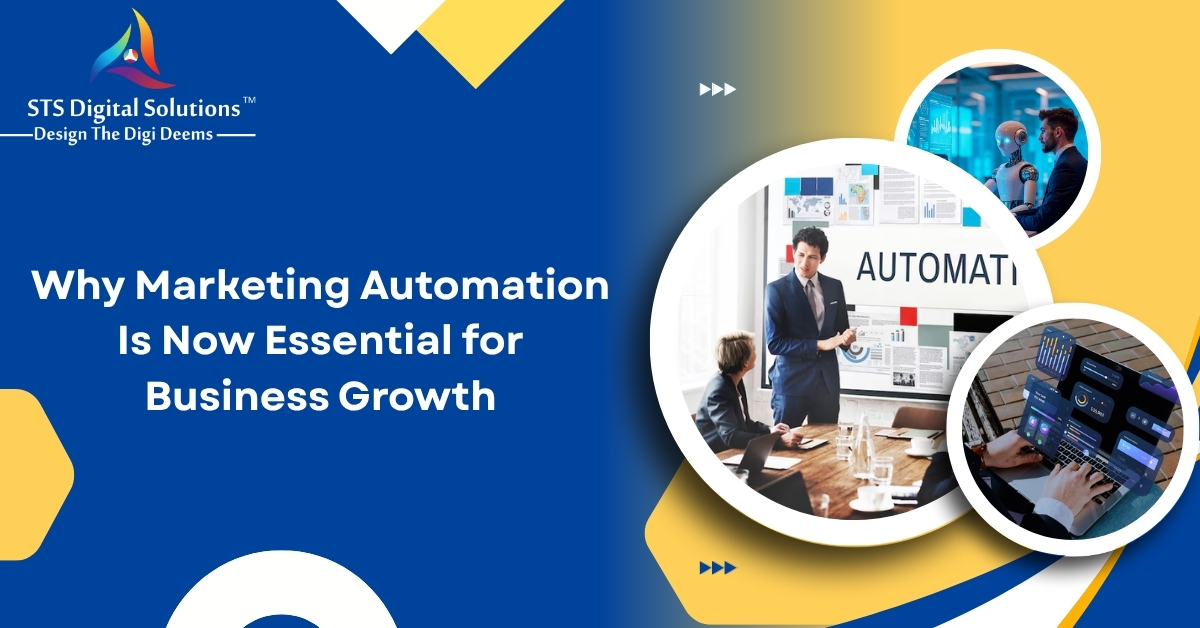
In today’s fast-paced digital world, businesses can no longer rely on manual marketing efforts to reach, nurture, and convert leads effectively. As customer journeys become more complex and multi-channel, marketing automation has emerged as a powerful solution to simplify processes, increase efficiency, and drive measurable growth. Marketing automation helps businesses streamline repetitive tasks, personalize communication, and make data-driven decisions that directly impact revenue. Whether you are a small startup or a large enterprise, automation is no longer a luxury—it’s a necessity for scaling your marketing operations in 2025 and beyond.
Understanding Marketing Automation
Marketing automation refers to using technology to automate repetitive marketing tasks such as email campaigns, lead scoring, social media scheduling, and customer segmentation. The goal is to nurture leads more efficiently while improving the overall customer experience. Instead of manually sending emails or tracking customer behaviors, businesses can set up workflows that automatically deliver the right message to the right person at the right time.
For example, when a customer signs up for your newsletter, automation tools can instantly send a welcome email, add them to a specific audience segment, and trigger follow-up campaigns based on their engagement. This ensures consistent communication while freeing up valuable time for marketers to focus on strategy and creativity.
How Marketing Automation Drives Business Growth
Marketing automation directly contributes to business growth by increasing lead generation, improving conversion rates, and reducing marketing costs. One of its key advantages is scalability—you can reach thousands of potential customers with personalized messages without increasing your team size. Automated campaigns ensure that no lead is left unattended, nurturing prospects until they are ready to buy.
Automation also enhances lead quality through better targeting. With behavioral tracking and data analytics, marketers can segment audiences based on interests, location, or purchase intent. This leads to higher engagement rates, more qualified leads, and increased customer retention. Moreover, automation provides real-time insights into campaign performance, allowing businesses to continuously optimize their marketing strategies for better ROI.
Personalization at Scale
One of the biggest challenges in modern marketing is maintaining a personal touch while scaling communication. Marketing automation bridges this gap. Through AI-driven insights and segmentation, businesses can deliver highly personalized messages to different customer groups. For instance, e-commerce brands can send personalized product recommendations based on browsing behavior or past purchases, while B2B companies can tailor content according to a prospect’s industry or company size.
Personalized automation not only improves conversion rates but also builds stronger relationships with customers. When people receive relevant and timely messages, they are more likely to engage and stay loyal to your brand.
Multi-Channel Campaign Integration
In 2025, customers interact with brands across multiple channels—email, social media, SMS, websites, and even chatbots. Marketing automation tools allow businesses to manage all these platforms from a single dashboard. This ensures message consistency and helps track customer journeys across different touchpoints.
For instance, an automated workflow can start with an email campaign, followed by a retargeting ad on social media, and end with an SMS reminder—all triggered based on user actions. This integrated approach ensures that your marketing is cohesive, efficient, and aligned with customer behavior.

Data-Driven Decision Making
Data is at the heart of every successful marketing strategy. Automation tools collect vast amounts of data from various channels, providing valuable insights into audience preferences, engagement patterns, and conversion metrics. These analytics help businesses understand what’s working and what’s not.
By leveraging this data, marketers can refine their content strategies, adjust budgets, and optimize targeting to maximize ROI. Predictive analytics, powered by AI, takes this a step further by forecasting customer behavior, helping businesses make proactive decisions that drive better outcomes.
Cost and Time Efficiency
Manual marketing requires substantial human effort, which limits scalability and increases costs. Automation significantly reduces this burden by handling routine tasks such as email follow-ups, campaign scheduling, and performance reporting. This not only saves time but also lowers operational expenses.
Moreover, by automating lead nurturing and scoring, businesses can prioritize high-quality leads and allocate resources more effectively. The result is higher productivity, reduced marketing spend, and improved revenue efficiency—all critical for sustainable business growth.
Popular Marketing Automation Tools in 2025
Several marketing automation tools are making it easier for businesses to grow in 2025. Platforms like HubSpot, ActiveCampaign, Mailchimp, and Marketo offer end-to-end automation for email marketing, CRM integration, and campaign analytics. AI-driven tools like Customer.io and Autopilot are revolutionizing personalization, enabling brands to deliver contextual messages automatically.
Social media automation tools such as Buffer and Hootsuite also play an important role by allowing marketers to schedule posts, monitor engagement, and manage campaigns efficiently across multiple platforms. Choosing the right mix of these tools depends on your business goals, team size, and customer base.
Overcoming Common Challenges
While marketing automation offers immense potential, it requires strategic implementation. Businesses often make the mistake of over-automating or neglecting personalization. To avoid this, it’s essential to balance automation with human creativity. Another common challenge is poor data management—automation tools are only as effective as the quality of data they process. Regularly updating customer information and cleaning databases ensures better campaign performance.
Additionally, teams must stay trained on the latest tools and trends. Marketing automation technology evolves rapidly, so ongoing learning helps businesses leverage its full capabilities.The Future of Marketing Automation
The future of marketing automation lies in deeper AI integration, predictive targeting, and hyper-personalization. As consumer expectations rise, automation tools will become even more intelligent, capable of understanding emotions, intent, and behavior in real-time. Businesses that embrace these innovations early will enjoy a significant competitive advantage.
Moreover, automation will move beyond marketing into customer service, product recommendations, and retention strategies. This means every stage of the customer journey—from discovery to post-purchase engagement—will be influenced by automation, creating seamless brand experiences.
Conclusion
Marketing automation is no longer just about saving time—it’s about driving sustainable business growth. By combining automation with data analytics and personalization, businesses can create smarter, more efficient marketing systems that generate higher ROI. In a competitive digital landscape, those who fail to adopt automation risk falling behind.
Companies like STS Digital Solutions help businesses implement effective marketing automation strategies that simplify workflows, increase conversions, and enhance customer engagement. By leveraging automation tools intelligently, brands can scale faster, make informed decisions, and stay ahead in the evolving world of digital marketing.
Maximize Your Online Impact - Contact Our Experts!